Patterns across the week
Workdays and days off may look different. A sleep diary can connect bedtimes, waking, naps and daytime sleepiness rather than relying on one remembered night.
MENTAL HEALTH CARE
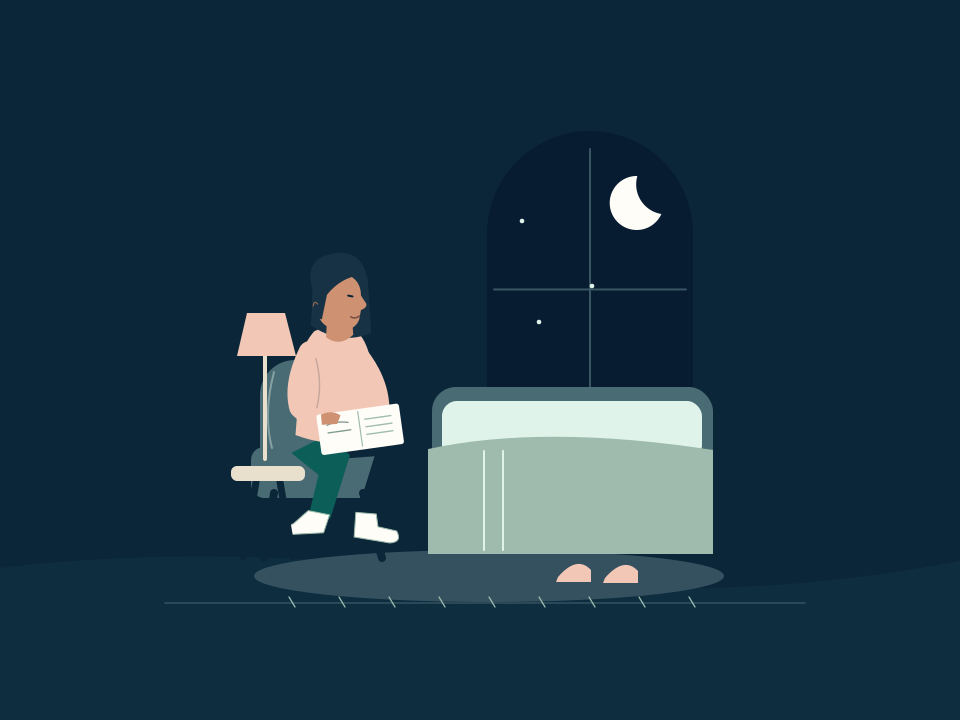
A restless night tells only part of the story. Learn how sleep timing, daytime effects and health context shape a discussion about persistent sleep difficulties.
Some concerns need in-person care. This informational website does not send requests or schedule appointments.
A CLEARER PICTURE
A sleep conversation looks beyond the number of hours in bed. Time spent falling asleep, repeated waking, changing schedules and daytime tiredness all add context. Stress can be part of that discussion, while medicines, physical health and other sleep problems may also need attention.
Workdays and days off may look different. A sleep diary can connect bedtimes, waking, naps and daytime sleepiness rather than relying on one remembered night.
A wind-down routine and a consistent schedule feature in public guidance. Alcohol may make falling asleep easier while making sleep lighter and more interrupted.
Cognitive behavioral therapy for insomnia is a structured treatment described in public guidance. It is more than a general list of bedtime tips.

HOW THE CONVERSATION TAKES SHAPE
Discuss sleep timing and how refreshed you feel. Notes about naps, caffeine, alcohol and activity can help explain differences between nights.
Mention medicines and existing health concerns. Loud snoring or waking gasping may lead a provider to consider evaluation for another sleep problem.
Ask what a suggested treatment involves and how its benefits and possible harms compare. Nonprescription sleep products also belong in that conversation.
This combined stress-and-sleep topic does not diagnose insomnia or another sleep disorder. Some sleep concerns require examination, tests or a sleep study. Describing structured insomnia treatment does not mean Ozivita supplies it, and the page does not recommend a sleeping medicine or supplement.
THE SERVICE-LEARNING LAB
Explore eight real-world questions about this care topic, then review clear explanations and useful questions for a care conversation.
Voluntary learning, not a symptom screen or medical advice. The score measures knowledge only—not your health, diagnosis or eligibility. No personal details; choices stay in this page only and clear when you leave.
CHOOSE A TOPIC
The interactive lab is not running. Read the same learning questions, answers and sources below; no answers are collected.
Interactive learning is optional. If it is unavailable, read this service’s eight questions, answers and sources below. No personal health answers are collected.
Correct answer: Sleep and wake times, naps, daytime sleepiness, and relevant caffeine, alcohol, and activity patterns.
NHLBI suggests a sleep diary that records sleep and wake times, naps, daytime sleepiness, and the timing of caffeine, alcohol, and exercise. Those details can reveal patterns a single nightly total misses. A diary helps a clinician understand the concern; it does not independently diagnose insomnia or prescribe a schedule.
Correct answer: Differences in the sleep schedule can help explain the pattern of the problem.
NHLBI lists workday and day-off sleep schedules among the details a clinician may ask about. The aim is to understand habits and patterns alongside duration, awakenings, and daytime effects. The comparison is one part of an assessment, not a stand-alone explanation for every sleep problem or a basis for self-directed treatment.
Correct answer: They can prompt evaluation for another sleep problem rather than assuming insomnia explains everything.
NHLBI includes snoring and gasping in the sleep history and explains that a sleep study can look for conditions such as sleep apnea or circadian rhythm disorders. Asking about these topics broadens the assessment. This scenario does not diagnose a sleep condition or decide whether any particular person needs a sleep study.
Correct answer: Other health conditions and medicines can affect sleep, and selected tests may help investigate them.
NHLBI describes reviewing health conditions, medicines, and substance use and using a physical examination to check for other medical contributors. It also notes that blood tests can check for thyroid problems or other conditions affecting sleep. These are possible assessment tools, not a universal testing package for everyone with a sleep concern.
Correct answer: It is a structured approach that can include cognitive work, relaxation, sleep education, and behavioral components.
NHLBI describes cognitive behavioral therapy for insomnia as a treatment plan with several components, including cognitive therapy, relaxation, sleep education, and behavioral approaches. It is commonly recommended first for long-term insomnia. Learning the components is not an instruction to carry out sleep restriction or another treatment technique without an appropriate care plan.
Correct answer: Alcohol can make sleep lighter and increase waking later in the night.
NHLBI explains that alcohol may make falling asleep easier while producing lighter sleep and more nighttime waking. The time it takes to fall asleep is therefore not the only measure of sleep quality. A sleep conversation can examine both the beginning of the night and what happens afterward, rather than assuming sedation means better sleep.
Correct answer: They deserve a benefits, limits, and safety discussion rather than an assumption that they suit everyone.
NHLBI warns that antihistamine sleep aids can be unsafe for some people and describes side effects and uncertain effectiveness of melatonin for insomnia. It also notes that supplements can have health risks. These distinctions support a clinician discussion; they do not select a product, dose, or medication change for the learner.
Correct answer: How do the proposed approach, possible side effects, and follow-up fit the type of sleep problem?
NHLBI distinguishes behavioral treatment from medicines and notes that some insomnia medicines are intended for short-term use while others are used longer. Benefits and side effects need discussion. A useful review connects the approach to the sleep problem and progress rather than promising a quick, universal solution or recommending medication changes here.
KEEP THE CONVERSATION USEFUL
Sleep patterns, daytime effects and health context explain more than a single night's duration.
YOUR QUESTIONS, ANSWERED
Focused answers, with sources you can explore.
A diary makes it easier to discuss repeated patterns: bedtime, waking, naps and daytime sleepiness, alongside caffeine, alcohol or exercise. NHLBI suggests it can help a provider understand whether activities are affecting sleep. It is not a diagnostic score.
Not always. For example, alcohol can make it easier to fall asleep but can lead to lighter sleep and waking during the night. A conversation about sleep therefore considers the whole night and how you feel afterward, not just falling asleep.
No. Public guidance cautions that antihistamine sleep aids may be unsafe for some people, and supplements can carry risks. Discuss the actual product with a provider rather than treating an over-the-counter label as proof that it suits your situation.
These pages support understanding, not diagnosis, urgency assessment or eligibility. Keep personal health details out of this website.
EXPLORE ANOTHER TOPIC