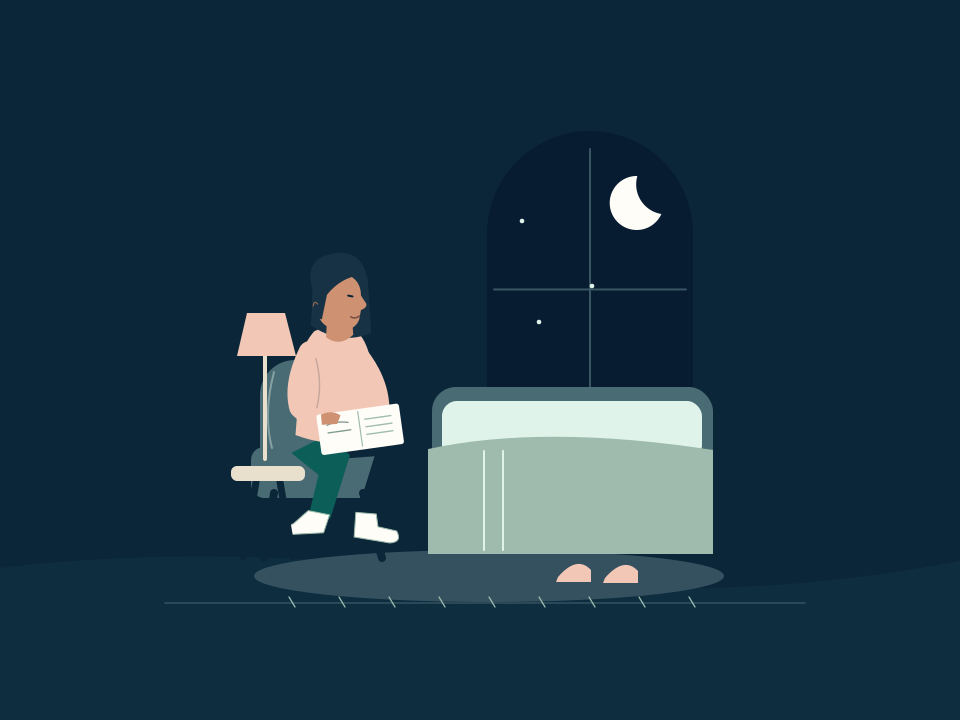
Impact matters
The difference is not simply whether you worry. The duration, intensity and effect on everyday life help give that worry clinical context.
MENTAL HEALTH CARE

When worry keeps taking up space in everyday life, understanding its pattern can make a conversation about anxiety more concrete and less overwhelming.
Some concerns need in-person care. This informational website does not send requests or schedule appointments.
A CLEARER PICTURE
Occasional worry is part of life. Persistent anxiety is different when it repeatedly interferes with daily activities. A clinical conversation considers when worry began, how often it returns and what it changes in your life, while also considering possible physical contributors.
The difference is not simply whether you worry. The duration, intensity and effect on everyday life help give that worry clinical context.
Public guidance describes cognitive behavioral therapy as an approach that examines unhelpful thoughts and behavior patterns, rather than simply telling someone to stop worrying.
Sleep habits and reducing caffeine may support anxiety care. Peer support can offer shared experience, but neither replaces individual treatment recommendations.

HOW THE CONVERSATION TAKES SHAPE
Explain when the pattern started and how it affects ordinary activities. Those details are more useful than trying to choose a diagnosis yourself.
Discuss physical health and other mental health concerns alongside anxiety. A provider may need an examination to consider another explanation.
Ask how your preferences and medical situation influence possible approaches. Finding an appropriate plan can take time rather than one immediate decision.
Recognizing a description of anxiety does not establish that you have a particular disorder. This page explains a care conversation, not a symptom test. References to psychotherapy describe public guidance; they do not confirm that Ozivita provides a named therapy or medication.
THE SERVICE-LEARNING LAB
Explore eight real-world questions about this care topic, then review clear explanations and useful questions for a care conversation.
Voluntary learning, not a symptom screen or medical advice. The score measures knowledge only—not your health, diagnosis or eligibility. No personal details; choices stay in this page only and clear when you leave.
CHOOSE A TOPIC
The interactive lab is not running. Read the same learning questions, answers and sources below; no answers are collected.
Interactive learning is optional. If it is unavailable, read this service’s eight questions, answers and sources below. No personal health answers are collected.
Correct answer: Occasional worry alone does not establish an anxiety disorder; persistence and impact matter.
NIMH distinguishes occasional anxiety from persistent anxiety that interferes with daily life. A difficult day or a single example of worry is not enough to establish a diagnosis. An assessment considers a broader pattern and context; this educational answer cannot determine whether a particular person has an anxiety disorder.
Correct answer: A picture of the course and everyday impact, rather than only a label for the feeling.
Questions about onset, frequency, duration, and impact help a clinician understand the pattern behind a concern. NIMH describes these as parts of an anxiety visit. They inform a clinical conversation rather than a stand-alone score, and the history may still need to be considered alongside physical health and other information.
Correct answer: To check whether a physical problem could be contributing to the symptoms.
NIMH notes that a provider may conduct a physical examination to check for an unrelated physical problem causing the symptoms. Mental and physical concerns can also coexist. Including this step does not dismiss the emotional experience or prove a diagnosis; it broadens the assessment beyond an assumption that every sensation is anxiety.
Correct answer: Questioning unhelpful interpretations and practicing different responses to them.
Cognitive behavioral therapy helps people notice and question inaccurate or harmful ways of thinking and change unhelpful behavior patterns. It is more than reassurance or simply being told not to worry. NIMH describes CBT as a researched treatment for generalized anxiety disorder, but the choice of therapy still belongs in an individualized discussion.
Correct answer: It encourages nonjudgmental acceptance and engagement in meaningful activities.
Acceptance and commitment therapy uses approaches such as mindfulness and goal setting, emphasizing nonjudgmental acceptance and meaningful activity. That is a different emphasis from challenging the accuracy of thoughts in CBT. Learning the distinction can make a therapy discussion more useful; it does not identify which approach will work best for a particular person.
Correct answer: Needs, preferences, and medical circumstances can lead to different combinations of care.
NIMH describes anxiety treatment as psychotherapy, medication, or both, with choices shaped by needs, preferences, and medical circumstances. Finding a suitable plan can take time and adjustment with a clinician. An educational result neither selects a treatment nor shows that a person needs medication or a paid appointment.
Correct answer: They may support care, but they do not automatically replace indicated treatment.
NIMH describes healthy habits and stress-management techniques as potentially helpful alongside standard care. It also states that a healthy lifestyle alone cannot replace treatment. This distinction avoids both dismissing everyday supports and promising that one routine will resolve every anxiety problem. A clinician can discuss how supportive habits fit an individual plan.
Correct answer: Their experience may offer support, but it does not replace individualized treatment recommendations.
Support groups can offer shared experience and encouragement. NIMH cautions that advice from a group member should be used carefully and does not replace recommendations from a health care provider. A helpful discussion can separate emotional support from treatment decisions, especially when other mental or physical conditions make care more complex.
KEEP THE CONVERSATION USEFUL
Anxiety conversations become clearer when they connect recurring worry, daily impact and individual care preferences.
YOUR QUESTIONS, ANSWERED
Focused answers, with sources you can explore.
You can describe the worry and its effect without naming a disorder. A provider uses the history and may consider physical health as well. The purpose is to understand your experience, not to arrive with a self-diagnosis.
No. NIMH describes approaches with different emphases: cognitive behavioral therapy examines thought and behavior patterns, while acceptance and commitment therapy emphasizes nonjudgmental acceptance and meaningful activity. Discussing these differences is education, not a statement of local therapy availability.
Healthy habits can be helpful alongside care, but public guidance does not present them as a replacement for treatment. Likewise, a support group offers a different kind of help from a provider's individual recommendations about anxiety.
These pages support understanding, not diagnosis, urgency assessment or eligibility. Keep personal health details out of this website.
EXPLORE ANOTHER TOPIC